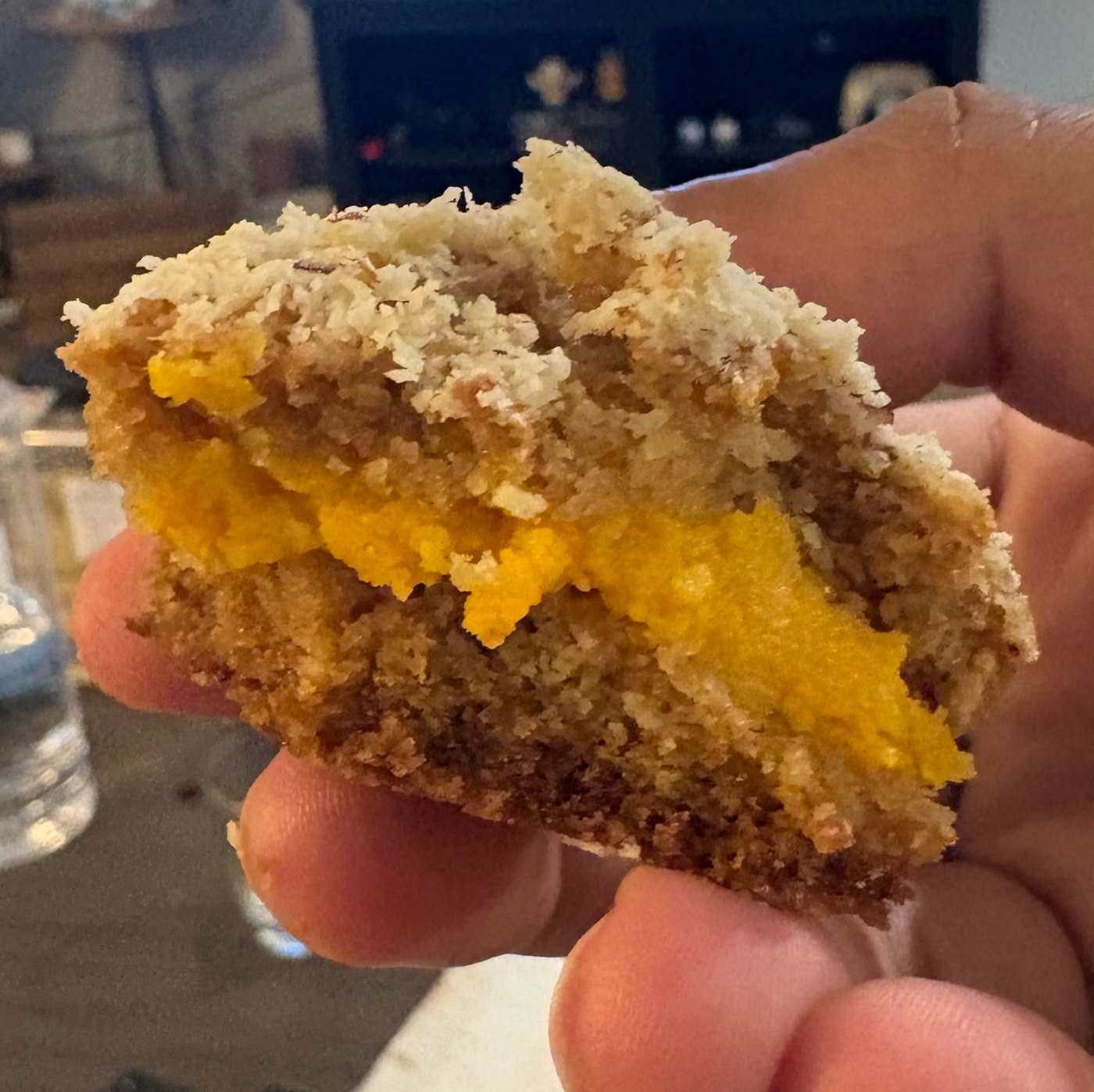
Every winter in north India, when red Delhi carrots come into the markets, kitchens fill with the smell of milk reducing on a low flame. The carrots are grated by hand and cooked in that milk for hours, then in ghee and sugar, until they turn deep red and glossy. A little cardamom, a handful of nuts. That's gajar halwa.
Its story is often traced to the Mughal era, when royal kitchens turned slow, milk-based sweets into an art. Wherever it began, it became a dessert for celebrations: weddings, Diwali, and the coldest evenings of the year.
“a dessert that takes an afternoon, for a season that lasts a few weeks.”
three layers,
made separately.
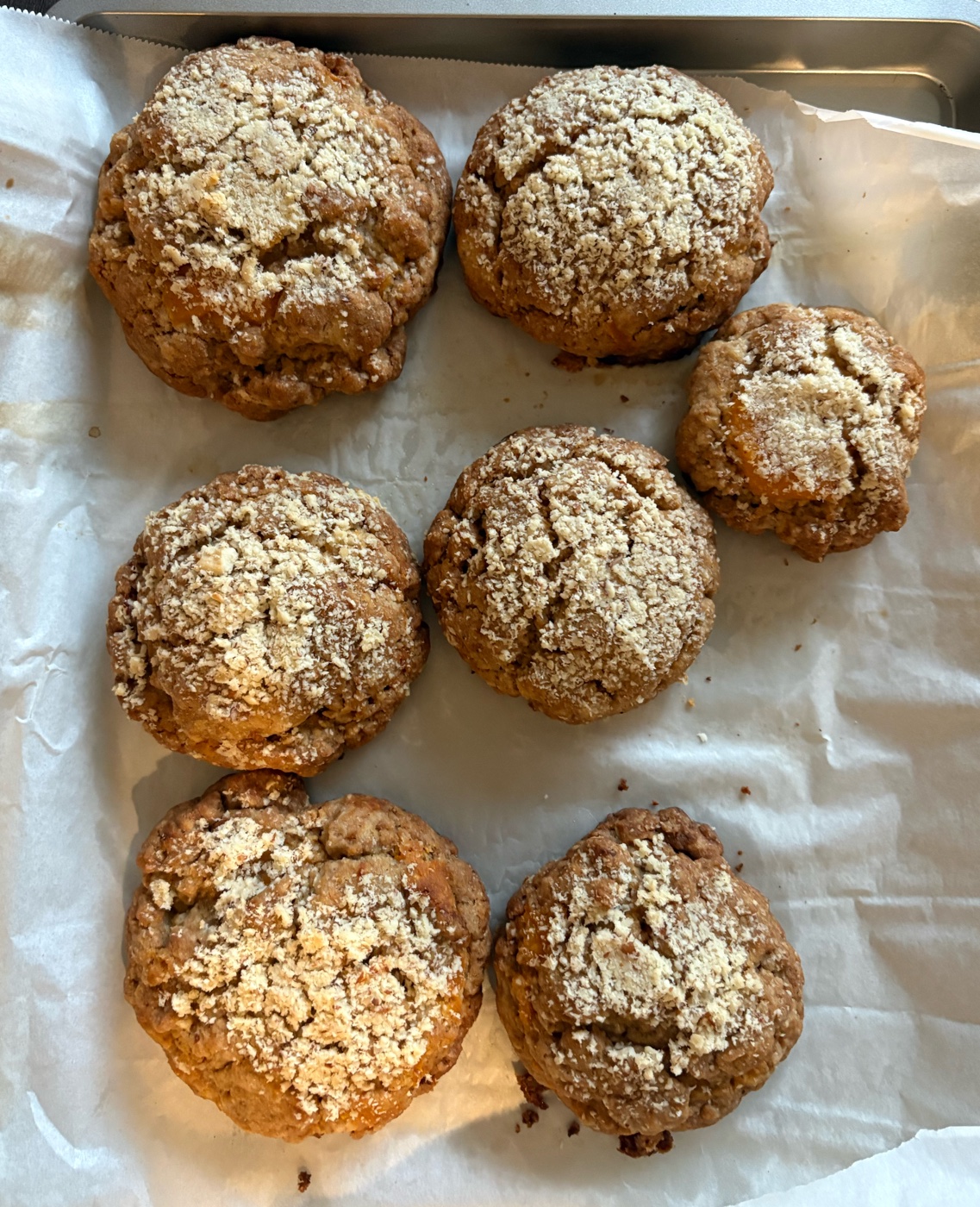
shaped by hand
The halwa is cooked the day before, the dough rests overnight, and every cookie is filled and closed by hand. Then it's baked the morning you pick it up. No preservatives, because it was never meant to sit on a shelf.
from a royal winter table to your 3 pm.
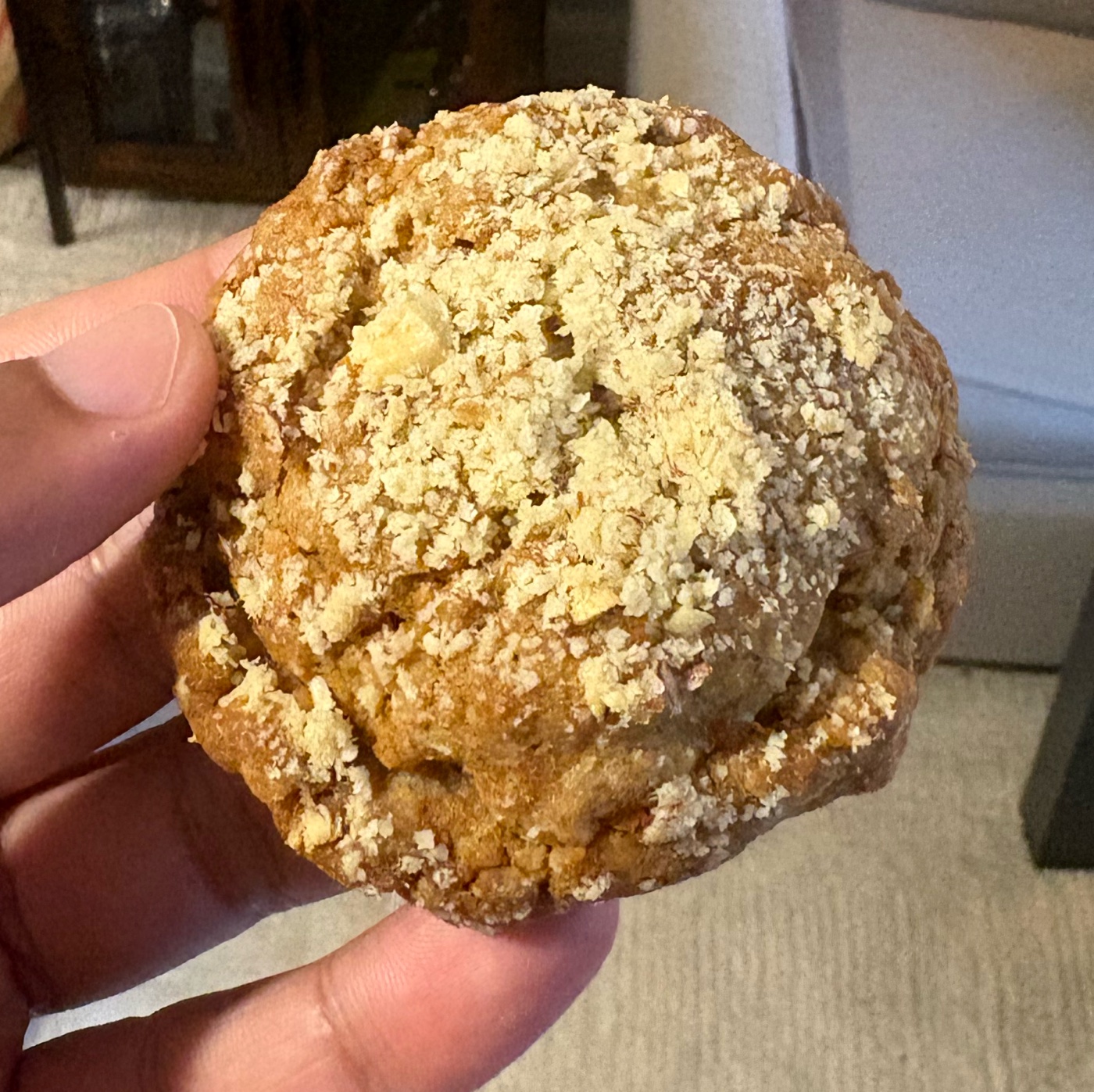
ten seconds